
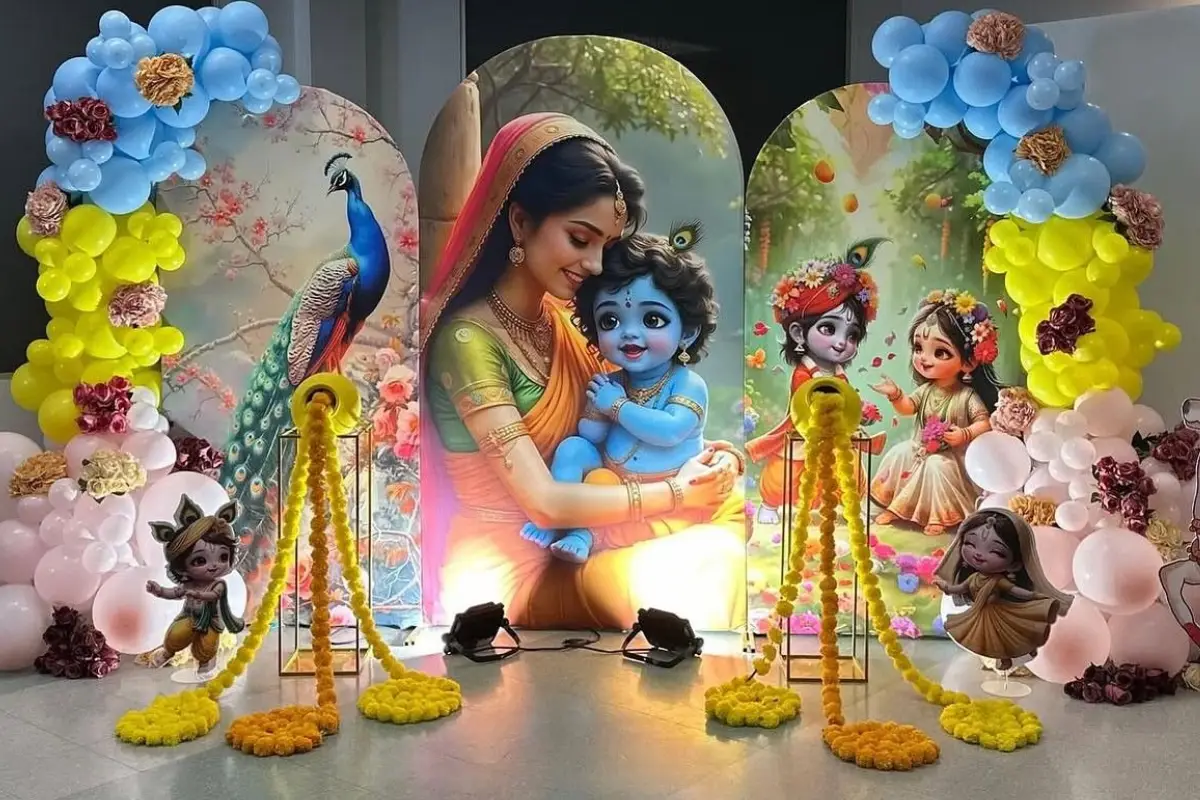
Annaprashan is the Hindu ceremony marking the first time a baby eats solid food, usually rice. In Bengali households it is called mukhe bhaat — literally “rice in the mouth” — and the two words mean the same ceremony.
When it happens
Traditionally in the sixth month for a boy and the fifth or seventh for a girl, with the exact day chosen by the family, often with a priest. Many families now simply pick a convenient weekend near the traditional month. Both are common in Kolkata and neither is considered wrong.
What happens on the day
A puja is performed. The baby is dressed, usually in new clothes given by the maternal family. The first mouthful of rice — often payesh — is fed by the maternal uncle, the mama, though in some families it is the grandfather. Guests then feed the baby in turn, and the rest of the day is lunch.
Many families also do the haate khori tray: small objects laid out — a pen, a book, coins, a lump of earth — for the baby to reach towards, with what they pick up said to hint at what they will be drawn to. It is played as a game and it is the part everybody photographs.
What the decoration has to do
Everything centres on the seat. The baby will be placed on a decorated chowki or chair and will not move from it for the ritual, so that is where every photograph is taken from. The backdrop behind the seat matters more than anything on the far walls, and it has to read well from four feet away rather than from across a hall.
The second thing that matters is the entrance, because relatives arrive in a stream over an hour and the doorway is what they walk into.
Timing
Annaprashan timings are usually early morning. The decoration has to be finished before the family starts arriving, which is earlier still. That is worth agreeing explicitly with whoever is decorating rather than assuming.
What a setup includes, for home or community hall: annaprashan decoration in Kolkata.
